YETI Roadie 48 review: the cooler I roll instead of carry
 Marion Tucker
· Has used every YETI cooler in this class on camp weekends
Marion Tucker
· Has used every YETI cooler in this class on camp weekends
Reviewed: 15 August 2026 Last measured: not yet — see method
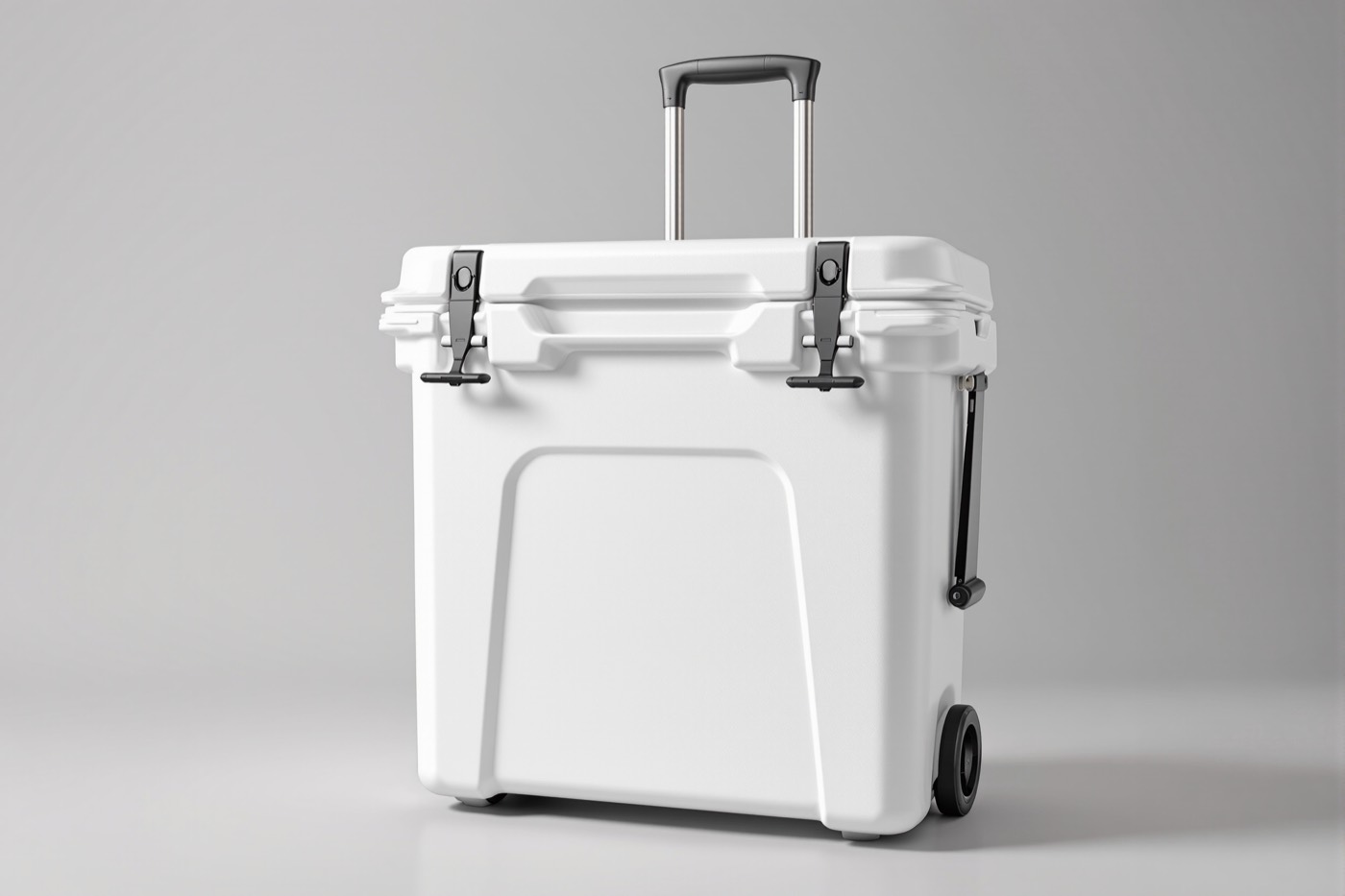
The Roadie 48 is the cooler I stop carrying and start towing. It holds a weekend of food for a small group and rolls it from the vehicle to the site on hard ground, which is exactly the job this site cares about. The moment the ground goes soft, or the cooler has to sleep outside, it stops being the right answer.
My verdict
Buy it if the ground between your vehicle and your site is hard — pavement, packed dirt, a launch ramp, a mown field — and one person has to move a weekend of food across it.
Skip it if the cooler sleeps outdoors in bear country, or the last stretch is deep sand, stairs or timber. There is no lock point on this cooler, and once the wheels stop you are lifting an awkward square box by two moulded side grips.
What I use it for
I roll this one. That is the whole argument for it. A Tundra stays where you drop it and a Roadie 24 goes in one hand, but neither of those moves a family weekend of food a hundred yards on its own. This does, and it does it without a second person.
The reviewers who spent real trips with it all say the same thing about rolling. Man Makes Fire pulled a loaded one for hundreds of yards. Family Handyman calls moving it a one-woman job and says she would have needed help without the wheels. Switchback Travel towed theirs uphill for a season and found scuffs, no structural damage. That part is settled.
Why the published day-counts disagree
Search this cooler and you will find ice figures from two days to seven and a half. Nobody found a difference in the hardware. What separates those numbers is how the box was loaded and where it sat.
GearJunkie is the clearest example, because Morgan Tilton ran three loads and published the conditions of each. She deliberately skipped the pre-chill bag and filled about one third with ice instead of the two thirds YETI asks for. In a hot truck bed she got seven hours to half melt. In a cool room, on the same load, she got two full days. Same cooler, same week.
Family Handyman shows the other half of the pattern on one trip. One third of ice in July sun was gone by morning. Two thirds of ice, same weather, held all day. So when you compare published day-counts, you are usually comparing ice ratios and pre-chill habits, not coolers.
What the published runs actually found
Every row below is somebody else's run, with their load and their weather attached. I have led with Outside, because Joe Jackson is the only person on this search result who states his start mass, his ambient temperature and his sun exposure. None of these are my measurements.
| Measure | Result and conditions | Who measured it |
|---|---|---|
| Can temperature at 48 hours | 38 °F, from a start load of 10 lb of ice and six lukewarm cans, full sun, 93 °F weekend, no pre-chill stated | Outside, back-deck run, Jul 2022 |
| Ice left at 96 hours | none; the cans came out at 67 °F | Outside, same run |
| Ice left after 7 hours in transit | half melted, at 85–90 °F, on a one-third fill from a 6 lb bag, no pre-chill, lid never opened | GearJunkie, truck-bed run |
| Same one-third load, indoors | 2 full days to complete melt, in a 65 °F room with no sunlight | GearJunkie, indoor run |
| One-third ice, left out overnight | melted by morning, in July sun with lows above 70 °F | Family Handyman, Missouri fishing weekend |
| Two-thirds ice, same trip | held all day outdoors | Family Handyman, same trip |
| Loaded YETI’s way, two parts ice to one part contents | 4-plus days over a long Idaho weekend; no ambient temperature published | Man Makes Fire, unit supplied by YETI |
| Unattended in a van | 2 days cold, outside temperatures over 80 °F; van interior unknown by their own admission | Switchback Travel |
| Ice still floating at trip end | around 25 °C ambient, no pre-chill, lid opened about a minute three to five times a day; start mass not published | Explore Magazine, van camping, unit supplied by YETI (named, not linked — see note) |
| Days rated food safe and drink cold | 6.8 days at 40 °F and 7.5 days at 50 °F — the page publishes no ambient temperature, no start mass, no pre-chill and no lid routine | OutdoorGearLab |
| Days ice held | about five, in what they call sweltering conditions — no conditions published at all | RV.com |
Read that table top down, not as a range. Outside states his conditions in full, so his run can be argued with. OutdoorGearLab publishes the two longest figures on this search result and no conditions whatsoever, and RV.com publishes a day-count with nothing behind it — which is why I have not stacked either of them next to Outside, and why you should not either. Two of these units were supplied by YETI: Man Makes Fire says so, and so does Explore Magazine. I have named Explore rather than linked them, because their headline and their URL both carry a price, and no price ships on this site.
The one that rolls
Check price on Amazon for the YETI Roadie 48 on Amazon, opens in a new tab Paid link · price and stock live on AmazonWhat the wheels cost you
Wheels are not free. They are an axle, two solid tyres and a telescoping handle, and you carry all of it every time the rolling stops. OutdoorGearLab put this cooler on a scale at 26.6 lb empty. That is before a single bag of ice.
Wheels also need a line to run on. Gravel and packed dirt roll fine, by both GearJunkie's and Man Makes Fire's accounts, though GearJunkie notes the solid tyres pass every bump straight up the handle in a way rubber would not. Man Makes Fire is blunt about the limit: deep, soft sand is a harder pull. Outside's portability stretch went down stairs, through pea gravel and deep dirt, and stairs are the giveaway — on stairs you are not rolling anything, you are lifting it.
So on sand, on stairs, or through timber and brush at a hunt camp, the wheels are weight you are dragging. That is the trade. It is worth making when your ground is hard and it is a bad trade when it is not.
And the wheels do nothing for the lift. Switchback Travel found it heavy at capacity and awkward to get off a back seat. OutdoorGearLab says the moulded body handles are the weak part of an otherwise strong design, and that the square shape is harder to carry than a rectangular box. I agree with both. Rolling and lifting are different problems, and this cooler only solved one of them.
No lock point, so it does not sleep outside
This is the hardest constraint on the SKU and most pages skip it. There is no lock port for a shackle lock and the lid does not take a padlock. GearJunkie says it plainly, and calls the cooler not bear-proof. Switchback Travel says there is no system for making it fully bear-resistant, and their own practice is to put it back in the van overnight. Man Makes Fire says the same thing from the other direction, noting that the Tundra Haul's lid takes a padlock while the Roadie 48 and 60 do not.
Three independent sources, one answer. If your cooler stays out overnight where bears or people find it, this is the wrong YETI. Man Makes Fire's point about the Haul is the obvious escape hatch, and I am not going to send you to buy one, because I have not reviewed it and this site does not sell what it has not reviewed. Put the cooler in the vehicle, or buy a Tundra and lock it.
What annoys me and other reviewers
- The drain plug is not tethered. OutdoorGearLab and Switchback Travel both flag it independently. It has no leash and no home. You will lose it eventually, and OutdoorGearLab adds that it can be stiff to unscrew.
- It does not empty upright. GearJunkie had to tilt it nearly flat to get the last water out, because a recess under the port cups it. The plug itself held with a fully melted load, so the leak path is the lid, not the drain.
- The lid is not leakproof. GearJunkie explains why — the cooler is built for dry ice, so it is not sealed. Switchback Travel and OutdoorGearLab report the same behaviour. Do not lay it on its side in a back seat.
- The handle only locks fully extended. OutdoorGearLab and Switchback Travel both say it. GearJunkie measured the arm at 21 in from the base. If you are short and you are the one pulling it, there is no half-height setting and no workaround.
- Space is tighter than the nameplate. OutdoorGearLab measured the interior at 45.4 qt against a 48 qt name, and packable space is the weakest of the things they scored on this cooler.
- Handle play is contested. GearJunkie reports visible lateral and front-to-back movement in the extended handle. Man Makes Fire felt motion in the gaps and still judged it rugged after a rocky beach haul. Switchback found limited flex after a season. One publisher's finding, not a consensus fault — I am reporting it as such.
Two numbers this cooler has never settled
Empty weight and ice capacity both come in two versions, and no publisher explains the gap. I am not averaging them and I am not picking one quietly.
| Measure | Value | Who measured it |
|---|---|---|
| Empty weight, weighed | 26.6 lb | OutdoorGearLab, on their scale |
| Empty weight, printed as spec | 28.3 lb, matching YETI’s published figure | Man Makes Fire; Family Handyman |
| Empty weight, printed as spec | 25.8 lb | GearJunkie spec block, method not described |
| Empty weight, printed as spec | 28 lb 4.8 oz | Switchback Travel, method not described |
| Interior capacity, measured | 45.4 qt, against a 48 qt nameplate | OutdoorGearLab |
| Cans with no ice, counted by hand | 77 | OutdoorGearLab, photographed count |
| Cans with no ice, printed as spec | 76 | Switchback Travel; Man Makes Fire; Family Handyman |
| Cans with ice, two parts ice to one part cans | 42 | GearJunkie and RV.com, relaying YETI |
| Ice capacity, as printed in 2022 | 39 lb of ice alone | GearJunkie; RV.com, relaying YETI |
| Ice capacity, as printed in 2023 and 2024 | 54 lb of ice alone | Man Makes Fire; Family Handyman, relaying YETI |
| Handle arm | 21 in from the base, 6 in wide | GearJunkie, measured on the unit |
The weight split is odd and worth knowing before you plan a lift. The only publisher who says they put it on a scale, OutdoorGearLab, came in lighter than the figure YETI publishes, which is the opposite of what usually happens. The ice figure simply changed between the 2022 reviews and the 2023 ones, and nobody weighed ice into it either way. Plan around the heavier weight and the smaller ice number and you will not be surprised.
Who should not buy this, and what to buy instead
This site's job for a cooler is simple: keep ice two to three days on a camp or hunt weekend near a vehicle. Our standing rule is to skip a cooler if one person has to carry it far from that vehicle. The Roadie 48 meets the first test on the evidence above and fails the second by design, so here is who should walk away.
- You carry it off the road. Timber, brush, a blind, a boat deck — anywhere without a rolling line. Every portability finding in these reviews is a rolling finding. When the rolling stops you are lifting a square box by two moulded grips. Buy the Roadie 24 instead.
- It never leaves the vehicle anyway. If the cooler lands at the tailgate on Friday and stays there, you are paying weight for wheels you will not use. A Tundra 45 is the better box, and Tundra vs Roadie sets out that fork properly.
- It sleeps outside in bear country. No lock port, three sources, no argument. A Tundra locks. This does not.
- You are feeding a large group or camping a full week. Outside puts the 48 at a family of four for a weekend and the 60 at a bigger group or a full week. Man Makes Fire splits them the same way. Start with the Roadie 48 vs Roadie 60 comparison, then the Roadie 60 review.
- It is a beach day, a picnic and nothing else. RV.com says it outright: for that use a YETI is probably overkill, and something lighter will be easier to carry. That is a genuine no-sale and I am not going to talk you out of it.
- You are short and you will be the one pulling it. The handle locks only at full extension. Nothing in the line fixes that. Check the fit before you buy.
Roadie 48 or a Roadie 60?
Short answer: the 48 for a small family on a straightforward weekend, the 60 for a larger group or one family's full week. That is Outside's split and Man Makes Fire's, arrived at separately. Man Makes Fire says the only real difference is width — same height, same depth, a wider box.
One caveat you should hear from me rather than from a spec sheet: nobody in this set actually ran a 60. Every 60 figure published on this search result is YETI's spec relayed by somebody who had a 48 in front of them. The side-by-side, with that clearly marked, is on Roadie 48 vs Roadie 60.
Questions people ask about this cooler
Is the YETI Roadie 48 worth it?
What the money buys is a box that rolls a weekend of food from the vehicle to camp without a second pair of hands, and that holds a multi-day run when you load it the way YETI tells you to. What it does not buy is a lock, a cooler you can carry, or a shortcut around the loading rules. Every publisher who filled it two thirds with ice got a multi-day result. Every one who filled it a third got a day or a night. If your ground is hard and you will load it properly, it is worth it. If either of those is untrue, it is not.
Which is better, the YETI Roadie 48 or 60?
Neither is better. The 60 is the wider box for a bigger group or a longer trip, the 48 is the weekend size for a small family, and they behave the same otherwise. The full comparison lays out what is published for each and what nobody has published at all.
Which YETI Roadie is the best?
It depends entirely on whether the cooler rolls or gets carried, and I would be inventing an answer if I said otherwise. Nobody has run the wheeled Roadies against each other. If it moves in your hand, the Roadie 24 is the one that actually gets carried. If it rolls on hard ground, this one. If you are feeding a crowd, the Roadie 60.
How many cans does a YETI Roadie 48 hold?
Two numbers, and they answer two different questions. With no ice at all, OutdoorGearLab counted 77 by hand, and YETI's own figure of 76 is relayed by Switchback Travel, Man Makes Fire and Family Handyman. Packed the way you would actually use it, at two parts ice to one part cans, GearJunkie and RV.com both print 42. The first number is a packing exercise. The second is a cooler.
Check current price
Check price on Amazon for the YETI Roadie 48 on Amazon, opens in a new tab Paid link · price and stock live on Amazon